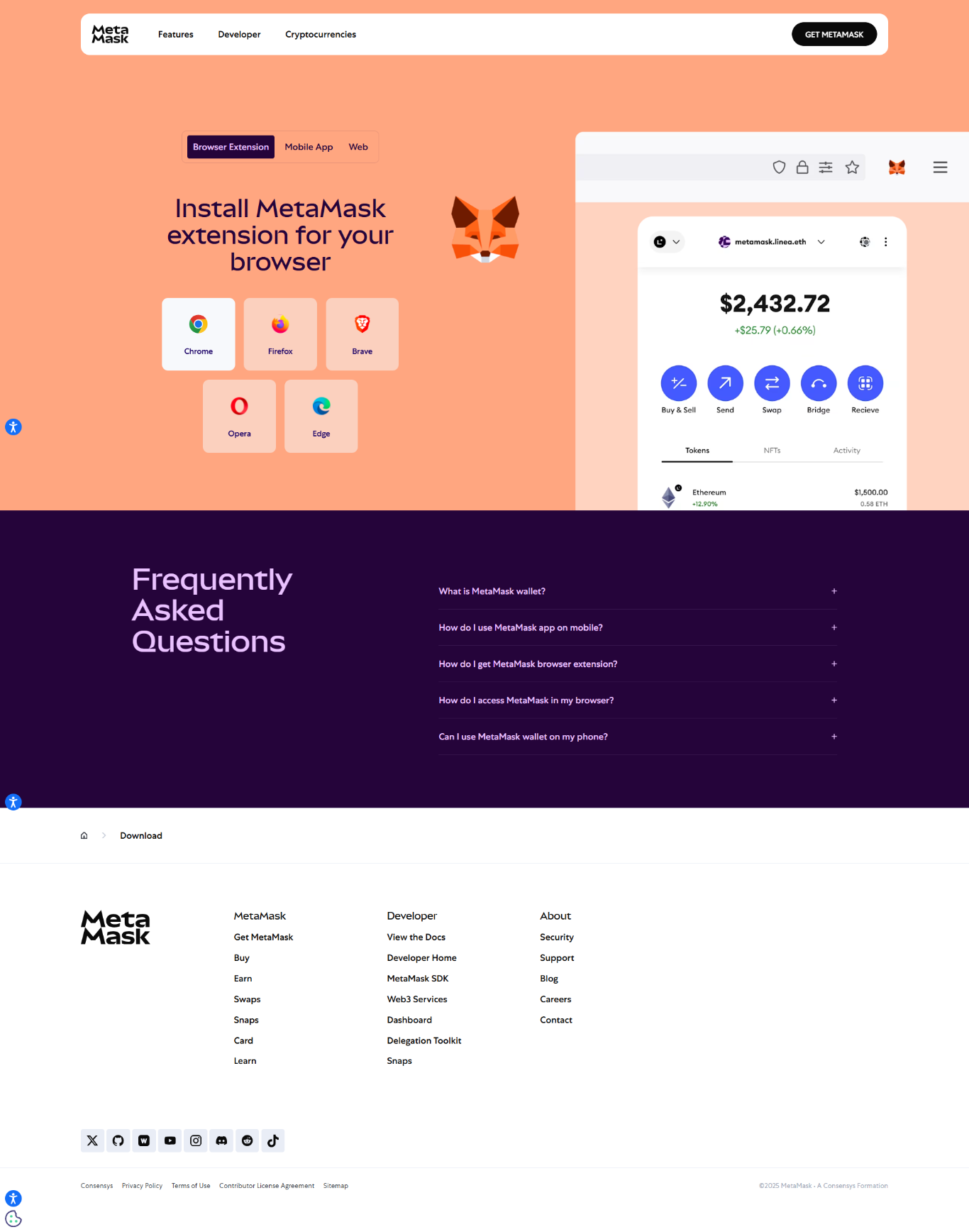
Metamask Login represents a gateway between users and decentralized applications (dApps). It is a protocol and interface that enables secure authentication using Ethereum-based wallets without revealing private keys. Users can safely interact with smart contracts, perform token transactions, and access blockchain services while retaining full control over their assets. Unlike traditional login systems that rely on email/password combinations, Metamask leverages cryptographic signatures to authenticate identities.
The login flow starts with a dApp invoking a request to the user’s Metamask wallet through web3 APIs. Upon connection, Metamask presents a signature request: the user confirms ownership of the wallet’s public address by signing a message. This signature is validated by the dApp backend or smart contract, confirming user authenticity without transmitting sensitive credentials. By design, Metamask never exposes private keys externally, mitigating risks inherent in centralized authentication systems.
Once logged in, users can perform operations such as approving ERC-20 token transfers, staking assets, participating in DeFi protocols, and accessing NFT marketplaces. The interface integrates with browser extensions or mobile applications, providing a seamless experience while maintaining security. Developers can customize login prompts and signature messages to include timestamps, nonces, or contextual information to prevent replay attacks. This ensures the session is unique and verifiable at any time.
Security practices are critical. Users must avoid phishing websites, ensure the correct network is selected, and never share the seed phrase. Metamask’s approach emphasizes user responsibility and provides multiple layers of security, including password encryption, hardware wallet integration, and optional biometric authentication on mobile devices. The system balances accessibility with security, making blockchain technology approachable for both novice and advanced users.
The Metamask Login ecosystem also supports single sign-on experiences across multiple dApps. By standardizing message signing protocols, developers can implement authentication without building custom key management systems. This interoperability accelerates the adoption of decentralized services, reduces friction, and fosters user trust. Moreover, smart contract interactions remain auditable on-chain, providing transparency and accountability that traditional login systems lack.
Educational components within the login interface guide users through verifying transaction details, understanding gas fees, and recognizing malicious contract calls. This continuous feedback loop helps users make informed decisions, promoting responsible usage. Advanced features like connecting multiple accounts, switching networks, and managing token balances further enhance usability while preserving security guarantees.
Integration with hardware wallets, such as Ledger or Trezor, adds an additional layer of protection. When enabled, transaction signing requires physical confirmation on the device, mitigating risks from malware or compromised browsers. The modular design of Metamask Login ensures compatibility with future cryptographic standards and blockchain networks beyond Ethereum, making it a flexible solution for evolving decentralized ecosystems.
From a developer standpoint, implementing Metamask Login is straightforward via widely adopted JavaScript libraries like ethers.js or web3.js. The developer workflow includes initiating a connection request, requesting a signature, verifying the signature server-side, and then managing the authenticated session. Optional features like nonce-based authentication, session expiration, and token-gated content can be layered to enhance security and user experience.
In conclusion, Metamask Login provides a secure, user-centric authentication mechanism for blockchain applications. By leveraging cryptographic signatures, user-controlled wallets, and developer-friendly APIs, it bridges the gap between traditional web interfaces and decentralized networks. Users gain direct control over assets, developers gain simplified integration, and the ecosystem benefits from transparent, auditable interactions. As decentralized technologies continue to expand, understanding the mechanics, security considerations, and best practices of Metamask Login is essential for both users and developers seeking safe and effective blockchain engagement.